


Day 9: A Hand Hug for Educators-When the Classroom Becomes a Mirror
By Niki Spears

I was an educator in public schools for over twenty years, and I spent several of those years working in Head Start. I know things have changed since my time in the classroom — or at least it feels that way. In many ways, it feels like things have become harder.
As I visit schools and talk with educators across the country, one concern comes up consistently: student behavior, especially since COVID. Educators are navigating more dysregulation, more emotional intensity, and more unpredictability than ever before.
And it’s important to say this clearly: What educators are experiencing is real.
When a student throws a chair across the room, that’s not a mindset issue — that’s a safety issue. This work is not about minimizing reality or ignoring the challenges educators face every day.
At the same time, what I’m about to offer may feel uncomfortable for some — not because it’s untrue, but because it asks us to look inward. If you’re willing, I believe it can offer relief in a space that causes so much stress.
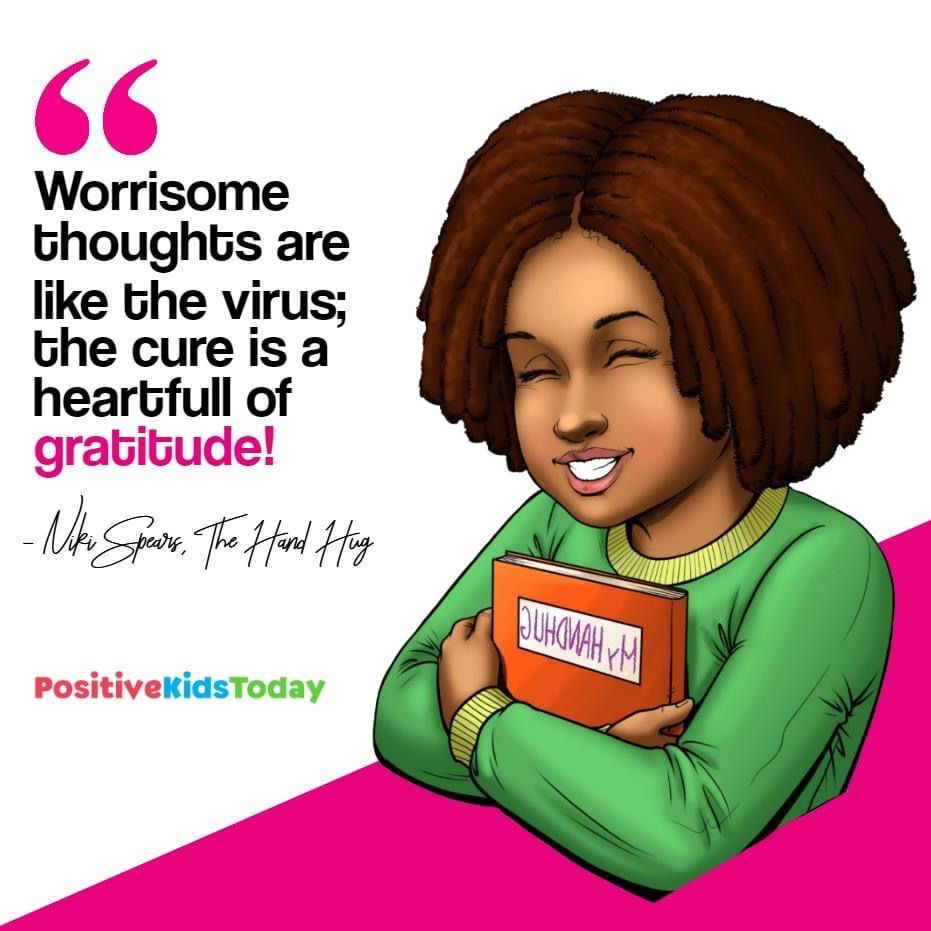
Educators Carry More Than Lesson Plans
Educators don’t just bring curriculum into their classrooms. They carry children’s emotions, families’ worries, system expectations, time pressure, and often their own unspoken stress. Teaching is deeply relational work — which means who we are on the inside inevitably shows up in how we experience the world on the outside.
Our classrooms are no different.
This is where The Hand Hug, Day 9 — All About You! — becomes relevant. While I wrote The Hand Hug as a children’s book, it offers a powerful message for educators and adults as well.

What The Hand Hug Teaches Us About Focus and Experience
In the story, Baelor begins her first day of school with worry bubbles floating above her head. How many of us start our day with worries before we even leave the house?
As Baelor’s day unfolds, those worries seem to follow her everywhere — to the breakfast table, onto the bus, and into the classroom. What’s important to notice is that nothing in her environment has changed yet. She’s safe in her home. She’s with her mother. But her feelings are shaping how she sees and experiences her world.
The story quietly introduces an important truth: what we focus on expands, and our inner world influences how we experience the outer world.
The Classroom as a Mirror

The same is often true in our classrooms.
Two educators can walk into the same building, on the same day, with the same students — and walk away with completely different experiences. One may notice growth, connection, and small moments of joy. Another may experience overwhelm, resistance, and exhaustion.
This doesn’t mean one teacher is “better” than the other.It means that classrooms, like life, can act as a mirror — reflecting what we’re carrying internally.
This isn’t about blame or questioning your experience.It’s about awareness.
Educator Worry Bubbles Are Real
When educators are grounded and supported, we tend to notice students’ strengths, effort, and growth. When we’re depleted, stretched thin, or carrying unresolved stress, the same behaviors can feel louder, more personal, or more threatening. Our nervous system influences how we interpret what’s happening around us.
Educators have worry bubbles too. They often sound like:
Am I doing enough?
Why won’t they listen?
I can’t control this room.
I’m failing these kids.
No one sees how hard this is.
When those worry bubbles are active, we may find ourselves reacting instead of responding, trying to control behavior instead of understanding it, or carrying emotional weight that was never meant to be ours alone.
When The Hand Hug Becomes a Practice

This is where The Hand Hug becomes more than a story — it becomes a practice.
One of the most powerful moments in the book is when Baelor’s teacher offers comfort and connection, and then immediately teaches Baelor how to do the Hand Hug on her own. The teacher doesn’t keep the role of emotional regulator. She models care — and then empowers Baelor to self-regulate.
That distinction matters deeply for educators.
We are not meant to carry everything for our students. We are meant to model emotional regulation, create safety, and then gradually release responsibility so students can build confidence in themselves. When we practice regulation first, we teach it more effectively.
A Hand Hug for Educators Starts With You
For educators, a Hand Hug begins internally. It starts with noticing our own triggers and activations before addressing behavior. It invites us to pause, ground ourselves, and ask reflective questions such as:
What is this situation bringing up for me?
When have I felt this lack of control or support before?
What do I need right now to respond from intention rather than reaction?
This is not therapy.It’s self-awareness — and it’s one of the most powerful leadership skills an educator can develop.
Why This Matters
When educators practice their own Hand Hug, classrooms shift. De-escalation happens more naturally. Students feel safer. Connection replaces control. Children don’t just learn emotional regulation from what we teach — they learn it from how we model it in real time.
The real magic of The Hand Hug is not that worry disappears forever. It’s that both children and adults learn how to pause, reflect, and shift their focus.
When we do, we begin to notice the butterflies again — small wins, moments of laughter, progress we might have missed when we were overwhelmed.
The world didn’t change. We changed how we showed up within it.
As educators, that matters more than we realize.
A Hand Hug for Educators (Quick Practice)
A Hand Hug for Educators – In the Moment
Pause: Notice your own worry bubble before responding to behavior.
Ground: Place one hand on your chest and one on your stomach.Take one slow breath in and a longer breath out.
Name: Silently identify what you’re feeling: frustration, fear, exhaustion, overwhelm.
Reflect: Ask: What might this moment be activating for me?What do I need right now to feel safe and grounded?
Choose: Respond from the educator you want to be — not from survival mode.


Comments